
Why Pencil-Test Animation Stops Us Cold

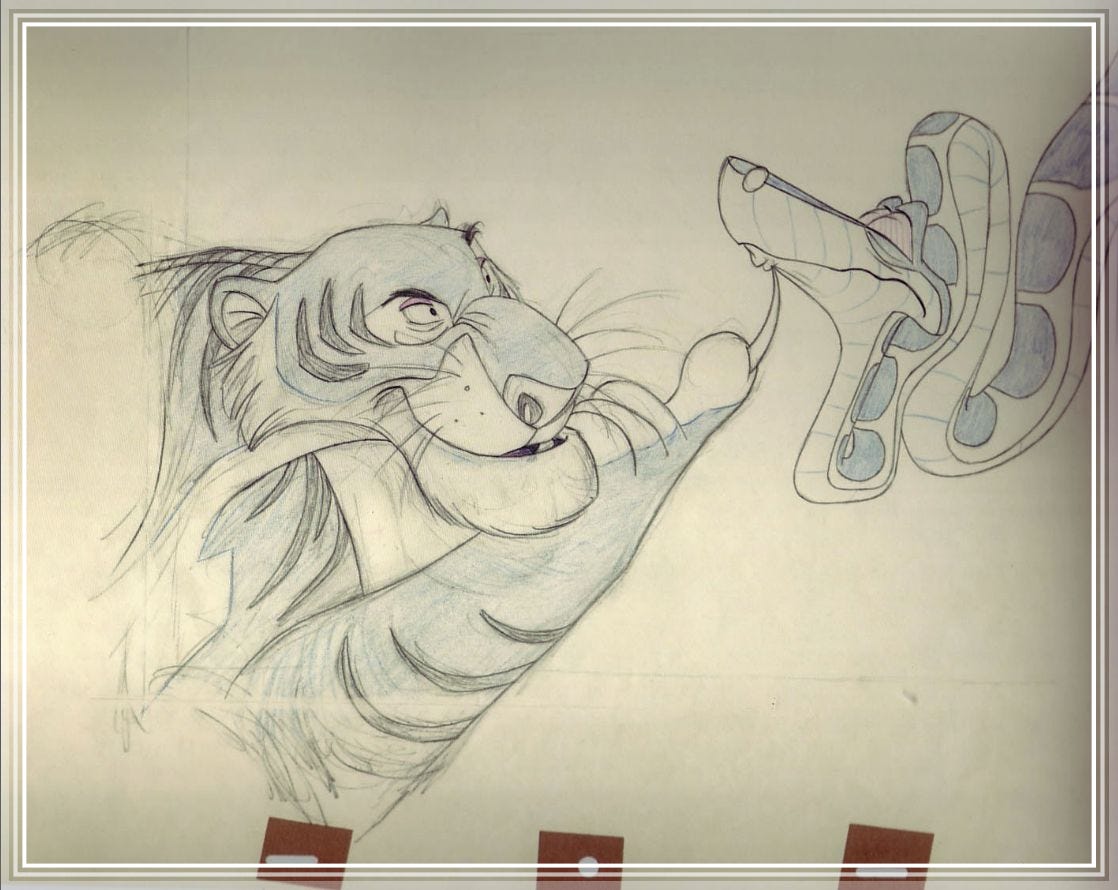
There is a specific quality of attention that comes over an audience when a pencil test is screened: a leaning-forward, a held breath, a suspension of the critical faculty that is different in kind from the suspension that a finished film produces. The finished film asks you to believe in something completed. The pencil test asks you to believe in something in the act of becoming, and the difference between those two requests is not a matter of degree but of category. One is the experience of encountering a world. The other is the experience of watching a world being made. And it turns out, and this is the thing that nobody in the industry entirely predicted, though in retrospect it seems obvious, that the second experience is, for reasons that go very deep into the psychology of perception and the mechanics of empathy, often more powerful than the first.
A pencil test is, technically, the roughest possible form of animation. It is the animator’s working drawing, not the cleaned-up line that will eventually be inked and painted and composited into the finished frame, but the exploratory mark, the line that is thinking rather than stating, surrounded by the ghost lines of where the animator’s pencil went before it found the right position and the faint structural scaffolding of the construction drawing underneath. In a pencil test, you can see the animator’s mind working. You can see the moment of decision. You can see, in the layering of marks, the record of a hand that tried something, reconsidered, tried something else, and arrived, through a process of physical reasoning, at the line that would eventually become a character’s face in the middle of a particular emotion. The finished film erases all of this. The pencil test preserves it. And what audiences respond to, when they encounter a great pencil test, the rough animation of a nine-old-men Disney scene, or the working drawings from a Richard Williams production, or the surviving pencil tests from Milt Kahl’s desk, is the presence of that process, the fact that the thinking has not been cleaned away.
To understand why this matters, you have to understand something about the history of animation as an industrial process and what that process was designed to produce and, crucially, what it was designed to eliminate. The studio system that Disney built in the 1930s and that became the template for the industry was an assembly line, in the most precise sense of that term: a production pipeline in which the work of creation was divided into specialised tasks, each performed by a different class of worker, each step in the process moving the raw material one stage closer to the finished product. The animator produced the key drawings, the poses that defined the character’s movement at its essential moments. The assistant animator cleaned those drawings up and added the breakdowns between keys. The in-betweener produced the frames between the breakdowns. The ink-and-paint department transferred the cleaned drawings to cels. And at each stage of the process, something was being removed as much as something was being added: the roughness of the animator’s original line, the evidence of process, the visible record of the hand that made the drawing. The finished cel, by the time it reached the camera, was as far from the animator’s pencil test as a printed book is from a writer’s first draft, which is to say that it was more legible, more polished, more controlled, and had lost, in the gaining of those qualities, the specific kind of life that rough things carry when they contain something irreducible.
This is not a criticism of the industrial process. It produced work of extraordinary beauty and durability. The finished films are masterpieces. But the pencil tests that survive from that process, the ones that Disney archivists have preserved, the ones that occasional retrospectives have screened for audiences who encounter them sometimes for the first time, carry a quality that the finished films, for all their beauty, do not. They carry the animator. Not the animator’s intentions, which the finished film faithfully realises, but the animator’s presence. The physical fact of a human being, sitting at a desk with a pencil and a stack of paper, thinking through the body of a drawn character what a living body would actually feel like from the inside.
Milt Kahl drew Shere Khan for The Jungle Book with a quality of aristocratic malevolence that remains, fifty years later, one of the great villain performances in American animation. The finished scenes are immaculate. The line is clean and confident and utterly controlled, each drawing a precise statement of intention with no room for ambiguity or revision. The pencil tests from those scenes show something different: a line that is equally confident but visibly in the act of finding its confidence, the earlier positions still ghosting through the paper, the structural lines of Kahl’s construction visible beneath the character’s surface. And the effect, watching the pencil test, is of witnessing the character in the act of being thought into existence, of being present at the moment when a human mind, working through a human hand, discovers what Shere Khan is. The finished film gives you Shere Khan. The pencil test gives you the discovery of Shere Khan. It turns out that the discovery is, in its way, the more intimate gift.
This is one part of the explanation for why pencil tests produce the response they do. But it is not the whole explanation, and the other part is stranger and in some respects more fundamental. It has to do with what the unfinished line does to the brain that encounters it, with the specific neurological event that a rough drawing triggers and that a finished drawing does not.
The psychologist Ernst Gombrich, writing about the history of art’s engagement with representation, identified a principle he called the beholder’s share: the idea that the perception of a representational image is not a passive reception but an active completion, that the eye and brain bring something to the image that the image itself does not contain, that seeing a picture of a face involves the viewer’s perceptual system doing work to construct the face from the marks on the surface. The implication of this principle, which Gombrich drew out with considerable precision, is that images which leave more for the beholder to complete are not less effective than images which leave less, they are often more effective, because the act of completion is itself an act of engagement, and engagement produces investment, and investment produces the experience of presence that is the deepest thing any representational art is trying to achieve.
The pencil test is, in Gombrich’s terms, a beholder’s-share machine. The rough line demands completion. The ghost lines of the revised position, the visible scaffolding of the construction drawing, the places where the animator’s pencil found the right mark and the places where it is still searching, all of this requires the viewer’s brain to do active work, to find the character in the roughness, to complete the face from the suggestion of the face, to supply, from some reservoir of imaginative investment, the physical solidity and psychological interiority that the rough line only implies. And in doing this work, the viewer is not merely receiving the animator’s creation. They are, in a meaningful sense, participating in it. Their brain is completing the drawing that the animator’s hand began. The character that they see is a collaboration between the animator who made the marks and the viewer who completed them. This is, when you consider it directly, an extraordinary thing for a stack of rough drawings on paper to accomplish. It is also, when you consider it in the light of everything we know about how human beings form attachments to fictional entities, precisely the mechanism by which the deepest engagements between audience and character are produced.
Richard Williams understood this. Williams, who spent the better part of three decades failing to complete The Thief and the Cobbler, a project that consumed his studio, his resources, his professional reputation, and the loyalty of some of the greatest animators of the twentieth century before being taken from him in a production dispute and completed, disastrously, without him, was, in his working method, almost pathologically resistant to the premature cleaning of a line. The animators who worked for him describe a culture in which the rough drawing was venerated, in which the pencil test was screened and re-screened and argued over with an intensity that the finished cel rarely received, in which the transition from rough to clean was treated as a moment of potential loss rather than a moment of inevitable gain. Williams had studied the Disney pencil tests with the obsessive attention of a scholar working a primary source, and what he had found in them, the presence of the animator’s thinking, the visible record of the process, he was determined to preserve as long as possible in his own work.
The surviving pencil tests from The Thief and the Cobbler are among the most extraordinary documents in the history of animation. They show, in the work of Ken Harris and Art Babbitt and Emery Hawkins and Williams himself, a quality of draftsmanship and imaginative investment that the finished film, which was never finished, not by Williams, can only gesture toward. And they produce, in the people who watch them, a response that is disproportionate to what they technically are: rough drawings, shot on video, without sound, without colour, without any of the apparatus of a finished cinematic experience. They produce something closer to awe. The awe is not for the technology. It is not for the production value. It is for the thinking that is visible in the line, for the evidence, present in every frame, that a human being sat down and worked through, with a pencil and an understanding of how living things move through space, what it would feel like to be inside a body that does not exist.
There is a further dimension to the pencil test’s power, and it is the one that is hardest to articulate but that may be the most important. It has to do with mortality. With the specific quality of presence that a rough drawing carries because of what it reveals about the person who made it.
A finished animation cel is, in a sense, anonymous. The cleaning process removes the individual hand. The inked line is a transcription of the animator’s drawing, not the drawing itself, and the transcription, however faithful, has separated the mark from the body that made it. A pencil test has not undergone this separation. The marks on the paper are the marks the animator made. The pressure variations in the line, the places where the pencil bore down harder and the places where it lifted almost to nothing, the specific quality of the graphite on the surface, these are the physical record of a hand that has, in most cases, been dead for decades. When you watch a pencil test by Milt Kahl or Frank Thomas or Ollie Johnston, you are watching something made by a person who is no longer alive, and the roughness of the test, the evidence it carries of the person rather than the product, makes this fact present in a way that the finished film does not. It is the difference between reading a letter and reading a typescript of a letter. The content is the same. The presence is not.
This is why people who see pencil tests for the first time often describe the experience in terms that seem excessive for what is, technically, an industrial work document. They say it moves them. They say it feels intimate. They say it feels like being in the room with someone. What they are responding to is the mark of a hand, the evidence, preserved in graphite on paper, of a human being who sat down and thought very hard about what it would feel like to be alive in a body that could fly, or dance, or die, or love, and who left that thinking visible in the line rather than cleaning it away. The finished film gives you the conclusion of that thinking. The pencil test gives you the thinking itself.
The digital turn in animation has made pencil tests, in the traditional sense, obsolete. The rough animation that contemporary animators produce exists as data rather than as physical marks, and however faithfully it preserves the quality of rough drawing on its screen surface, it does not carry the pencil test’s indexical relationship to a human hand. This is not, by itself, a loss: the best digital animation is work of extraordinary sophistication and imaginative depth, and the tools have extended the range of what animation can do in ways that the pencil-and-paper method could not approach. But it is a change. And it is a change that the audience registers, dimly and without being able to articulate why, when they watch a great pencil test and feel something that the finished film, any finished film, in any medium, does not quite reproduce.
What they feel is the presence of a person. The evidence of a mind working through a hand. The specific and irreplaceable aliveness of a rough mark made by a human being who was trying, with the tools they had and the knowledge they had built over a lifetime of looking at how living things move, to give life to something that had none. The pencil test does not hide this process. It is the record of the process. And what the audience responds to, in the held breath and the leaning-forward and the occasional inexplicable catch of feeling that a stack of rough drawings on paper can produce, is the oldest and most durable response in the history of art: the recognition of another consciousness, reaching across whatever distance separates the maker from the viewer, saying here, here is what I was thinking, here is the mark my hand made, here is the evidence that I was present and working and alive.
The line is rough. That is why it works.
The principal archives of Disney pencil-test animation are held at the Walt Disney Animation Research Library in Burbank, California. The surviving materials from Richard Williams’ The Thief and the Cobbler are held at various private collections. The Academy Film Archive holds extensive pencil-test and production materials from the classical Hollywood animation period.
I love this. The idea of rough drawings reading as a person versus cel work reading as a people really clicked for me.
I’ve been stuck on a question for a while now (sorry if it gets a little dense): how much of the animator’s inner state, the “spirituality” of the hand, actually survives the process?
Even after cleanup and all the layers of production, do you think that interiority still transfers perceptually or somatically?
Not in a literal sense of authorship, but almost as a kind of metaphysical residue in the motion itself.